
Chronic pain & soft tissue restriction
When the injury healed but the movement never came back
Scar tissue and fascial restriction change how a joint loads long after the original problem resolves. Skilled hands-on work and instrument-assisted soft tissue mobilization restore the glide that normal movement depends on.
The mechanism
Tissue that healed short
Fascia is the continuous connective sheet that wraps and separates every muscle, vessel, and organ. In healthy tissue, those layers glide across one another. After injury, surgery, prolonged immobility, or years of protective guarding, they can adhere — laying down disorganized collagen that binds layers together.
The result is rarely dramatic and almost always consequential. A shoulder that gives up the last fifteen degrees. A hip that stops extending, so the low back extends instead. A calf that will not lengthen, so the foot pronates through every step. The body compensates so competently that patients often cannot name where it started — only that something has been wrong for years.
Pain that persists is also a nervous-system phenomenon, not only a tissue one. Restoring mechanical glide matters, and so does progressively convincing a sensitized system that movement is safe. We work on both.
The tools
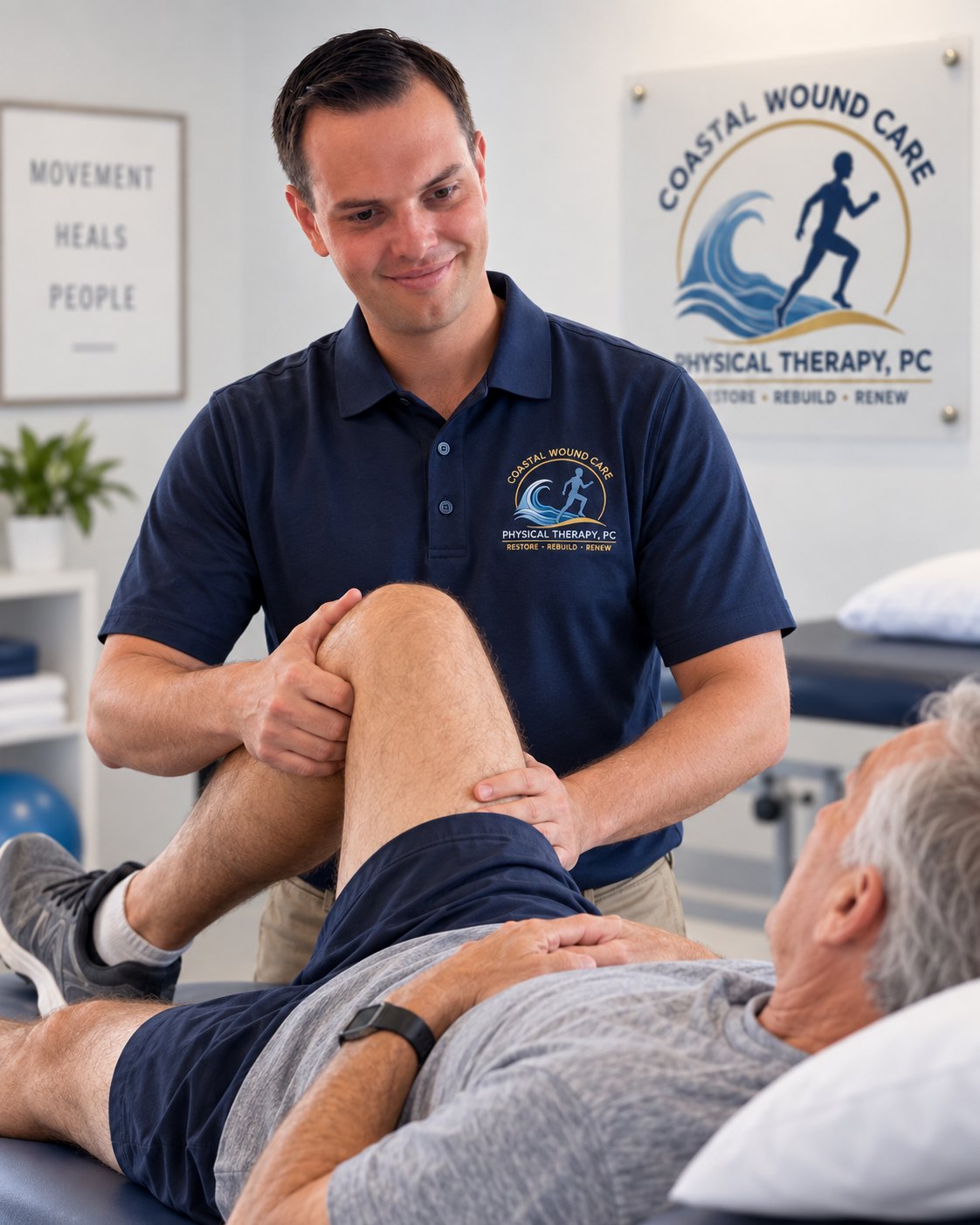
Manual and myofascial release
Sustained, graded hands-on pressure to release restriction layer by layer. Hands remain the most sensitive diagnostic instrument in the room — they find the restriction before they treat it.
HawkGrips instrument-assisted work
Contoured stainless steel instruments transmit tissue texture back to the clinician with a precision the hand cannot match, and deliver focused shear to dense, chronic adhesion — especially over scars and bony contours.
Frequently helps
- Post-surgical and traumatic scar restriction
- Persistent tendinopathy
- Plantar heel pain
- Frozen and stiff shoulders
- Neck and jaw-related headache
- Long-standing low back and hip pain
- Movement limits after prolonged immobility
Release is the opening, not the treatment
Manual therapy creates a window. Range that appears on the table and is not immediately loaded will be gone within days, because the nervous system reverts to the pattern it trusts.
So every session pairs release with immediate re-education: the newly available range gets loaded, controlled, and rehearsed before you leave, and you go home with a small number of specific things to do — not a photocopied sheet of twelve exercises you will never open.
- Release, then load, in the same visit
- A short, specific home programme you will actually do
- Objective re-measurement, so progress is visible rather than asserted
- Honest timelines — and an honest conversation if we are not the right answer
Start with a conversation, not a form
Tell us about the wound or the fall, and we’ll tell you honestly whether we’re the right fit — and what your physician needs to send if we are.